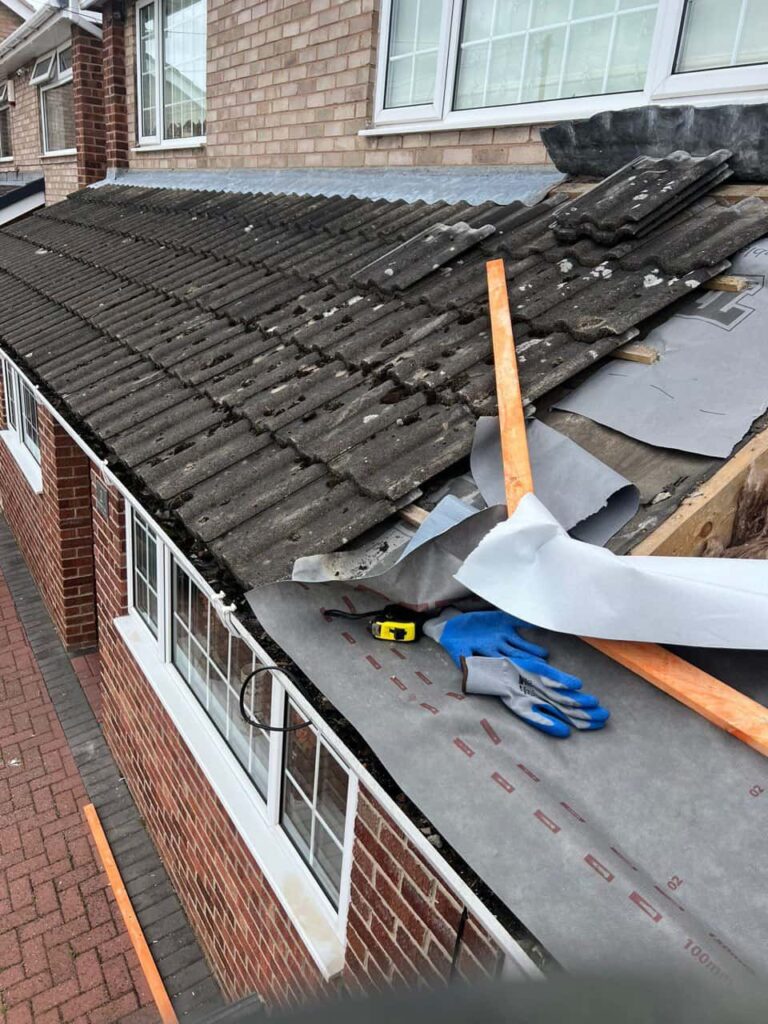
Sudden roof damage can be stressful, particularly when heavy rain, strong winds or another unexpected problem leaves your home vulnerable to water ingress. Acting promptly can help limit the damage and make it easier to identify the repairs that are required.
For homeowners in Clay Cross, Derbyshire, understanding what to do when a roof suffers sudden damage can help protect the property while professional repairs are arranged. From slipped tiles to damaged flashing, several roofing problems may require urgent attention.
What Should You Do When Your Roof Is Suddenly Damaged?
The first priority is to stay safe. Do not attempt to climb onto the roof yourself, particularly during or immediately after severe weather. Wet or damaged roofing materials can be unstable and slippery.
From ground level or from inside the property, look for obvious signs of damage. These may include missing tiles, visible gaps, damaged roof coverings or water entering through the ceiling.
If water is entering the property, place suitable containers beneath active drips and move furniture or belongings away from the affected area where possible. Avoid touching electrical fittings or equipment that may have become wet.
A professional roofer can then assess the external roof safely and determine the appropriate repair.
Common Causes of Sudden Roof Damage
Roof damage can happen for several reasons, with severe weather being a common trigger. Strong winds can loosen or displace tiles, while heavy rainfall can expose weaknesses around joints, flashing and roof coverings.
Other problems may occur when an existing defect has gradually weakened the roof. An ageing tile, deteriorated flashing or damaged seal may remain unnoticed until changing weather causes water to enter.
Identifying the underlying cause is important because simply addressing the visible leak may not resolve the wider roofing problem.
Slipped or Missing Roof Tiles
Tiles can become loose or displaced when subjected to strong winds or deterioration over time. A missing tile can leave the underlying roof structure exposed to rainfall.
Even a relatively small opening can allow water to enter areas that are not designed to remain exposed. Prompt replacement or repositioning of damaged tiles can help restore the roof covering.
The surrounding tiles should also be checked because nearby materials may have been loosened at the same time.
Damaged Flashing and Roof Junctions
Flashing is commonly installed around chimneys, roof junctions, walls and other vulnerable points. If flashing becomes cracked, loose or detached, water can find a route beneath the surrounding roofing materials.
Leaks caused by flashing problems can sometimes be difficult to locate because water may travel along the roof structure before appearing inside the property.
Professional inspection can help identify whether the flashing, surrounding materials or both require repair.
What If Water Is Already Entering the Property?
If a sudden leak has developed, dealing with the source as quickly as possible is important. Internal water marks or dripping may indicate that water has passed through more than one layer of the roof.
Do not assume that the point where water appears indoors is directly below the external defect. Water can travel along roofing materials and structural elements before becoming visible.
Once the immediate situation is controlled, the roof should be inspected to identify the entry point and determine whether any additional areas have been affected.
Can Emergency Roof Repairs Prevent Further Damage?
Prompt repairs can address defects before continued exposure to rain and wind causes them to become more extensive. The work required will depend on the type and severity of the damage.
A repair may involve replacing missing tiles, securing loose materials, repairing flashing, addressing damaged roof coverings or correcting another specific defect.
A proper assessment is important because the most visible problem may not always be the original cause of the damage.
How Can You Prepare for Future Roof Problems?
Regular roof inspections can help identify developing defects before they become urgent. Look out for cracked or missing tiles, deteriorating flashing, damaged roof coverings and signs of water ingress.
Keeping gutters and drainage areas clear can also help prevent water from accumulating where it should not.
If a roof has recently suffered damage, checking the surrounding area for related defects can help ensure that repairs address the problem comprehensively rather than focusing on one isolated symptom.
Emergency Roof Repairs in Clay Cross, Derbyshire
For homeowners in Clay Cross, Derbyshire, Clay Cross Roofing Repairs provides professional assistance with sudden roof damage and urgent roofing problems.
Whether your roof has suffered from slipped tiles, damaged flashing, leaks or other unexpected defects, a professional assessment can establish the cause and identify the appropriate repair. If your roof has been damaged and requires prompt attention, contact Clay Cross Roofing Repairs to arrange an assessment.
Conclusion
Sudden roof damage can allow water to enter the property and cause problems if it is left unattended. Taking sensible precautions, avoiding unsafe access and arranging a professional inspection are important first steps.
Whether the issue involves missing tiles, damaged flashing or another roofing defect, identifying and repairing the source of the problem can help restore the roof’s protective function. For properties in Clay Cross, Derbyshire, Clay Cross Roofing Repairs can provide professional assistance when unexpected roof damage requires attention.
Call us on: 01246 956 398
Click here to find out more about Clay Cross Roofing Repairs
Click here to complete our contact form and see how we can help with your roofing needs.