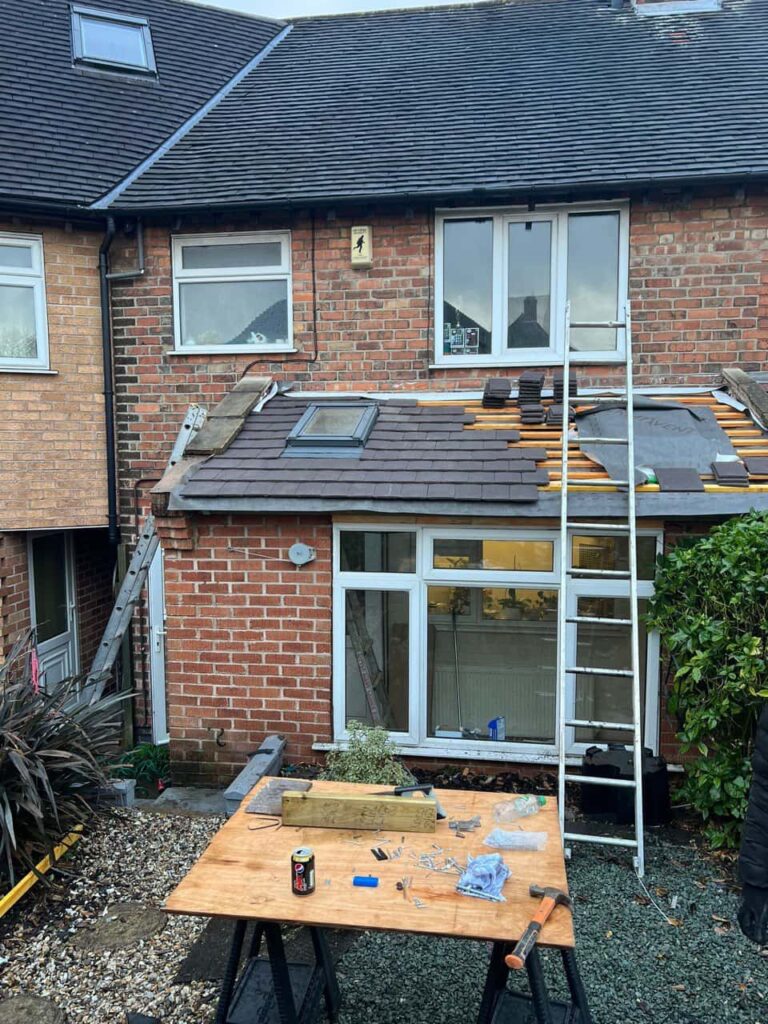
Heavy rain can put considerable strain on a roof, particularly where there are already weak, damaged or ageing areas. Some problems may be immediately visible, while others can remain hidden until water begins to enter the property.
Checking your roof after periods of heavy rainfall can help identify potential issues before they develop further. For homeowners in Clay Cross, Derbyshire, knowing the warning signs can make it easier to arrange appropriate roof repairs when necessary.
Why Heavy Rain Can Cause Roof Problems
A roof is designed to direct rainfall away from the property, but damaged tiles, deteriorated flashing, blocked drainage and existing weaknesses can affect how effectively it performs.
Heavy rainfall can expose these problems by forcing water into areas that would normally remain protected. If water gets beneath roof coverings or around vulnerable junctions, it can gradually affect the roof structure and interior of the property.
Check for Water Stains on Ceilings
One of the clearest signs of possible roof damage is a new water stain on a ceiling or upper wall.
These marks may appear as brown or darker patches and can become more noticeable following rainfall. Even if the area dries afterwards, the underlying source may still be present.
Water can travel along roof timbers or other materials before becoming visible indoors, so the location of a stain does not always indicate the exact point where water entered.
Look for Dampness in the Loft
If your property has a loft space, it can provide useful clues about the condition of the roof after heavy rain.
Signs to look for include:
- Damp or wet insulation
- Water marks on roof timbers
- Mould or persistent musty smells
- Visible drips
- Damp patches around roof openings
- Moisture beneath areas of damaged roof covering
If you discover moisture, identifying the source promptly can help prevent further deterioration.
Inspect for Damaged or Missing Tiles
Heavy rain is often accompanied by strong winds, which can loosen or displace roof tiles. Cracked or missing tiles can leave the underlying roof exposed to further weather.
From ground level, look for obvious gaps, uneven sections or tiles that appear to have moved. Do not climb onto the roof yourself to investigate, as roof surfaces can be slippery and unsafe, particularly after rainfall.
A professional inspection can identify damaged areas without putting you at unnecessary risk.
Check Flashing and Roof Junctions
Flashing is commonly used around chimneys, roof edges, junctions and other areas where water could otherwise enter.
If flashing becomes loose, cracked or deteriorated, heavy rain can find its way into these vulnerable points. Dampness around a chimney or roof junction may therefore indicate a problem that needs professional attention.
Because flashing defects are not always easy to identify from the ground, a closer inspection may be required.
Pay Attention to Gutter and Roof Edge Problems
Gutters and roof drainage systems need to handle significant amounts of water during heavy rainfall. If gutters become blocked or damaged, water may overflow against the roof edge or external walls.
After heavy rain, check for signs such as overflowing gutters, water running down walls or sections of guttering that appear to be pulling away from the property.
Maintaining clear drainage can help reduce unnecessary stress on the roof and surrounding areas.
Look for Sagging or Changes in the Roofline
A noticeable dip or sag in the roofline can indicate a more significant structural concern. It should not be ignored, particularly if it becomes apparent after prolonged or heavy rainfall.
Other warning signs may include visibly uneven roof sections or internal ceilings that appear to be changing shape.
These issues require professional assessment to determine the cause and the appropriate repair.
Why Early Roof Repairs Matter
A small defect can allow repeated moisture ingress each time it rains. Over time, this can affect roof coverings, timber and other parts of the building.
Addressing problems when they are first identified can help limit the extent of damage and prevent minor defects from developing into more complicated roofing work.
If heavy rain has revealed a problem with your roof, arranging an inspection can establish whether repairs are required.
Professional Roof Repairs in Clay Cross, Derbyshire
At Clay Cross Roofing Repairs, we can assess roof damage following heavy rain and identify areas that may require attention. From damaged roof tiles and flashing problems to leaks and other visible defects, professional assessment can help establish the cause of the issue.
If you have noticed signs of roof damage following heavy rain at your property in Clay Cross, Derbyshire, contact Clay Cross Roofing Repairs to discuss the problem and arrange a professional roof inspection.
Conclusion
Heavy rain can expose weaknesses that may otherwise go unnoticed. Water stains, damp loft areas, damaged tiles, faulty flashing, overflowing gutters and changes to the roofline are all signs that your roof may need attention.
Regular checks and prompt professional repairs can help protect the condition of your roof and prevent water-related problems from becoming more extensive. If you are concerned about roof damage after heavy rain in Clay Cross, Derbyshire, contact Clay Cross Roofing Repairs to arrange an assessment.
Call us on: 01246 956 398
Click here to find out more about Clay Cross Roofing Repairs
Click here to complete our contact form and see how we can help with your roofing needs.