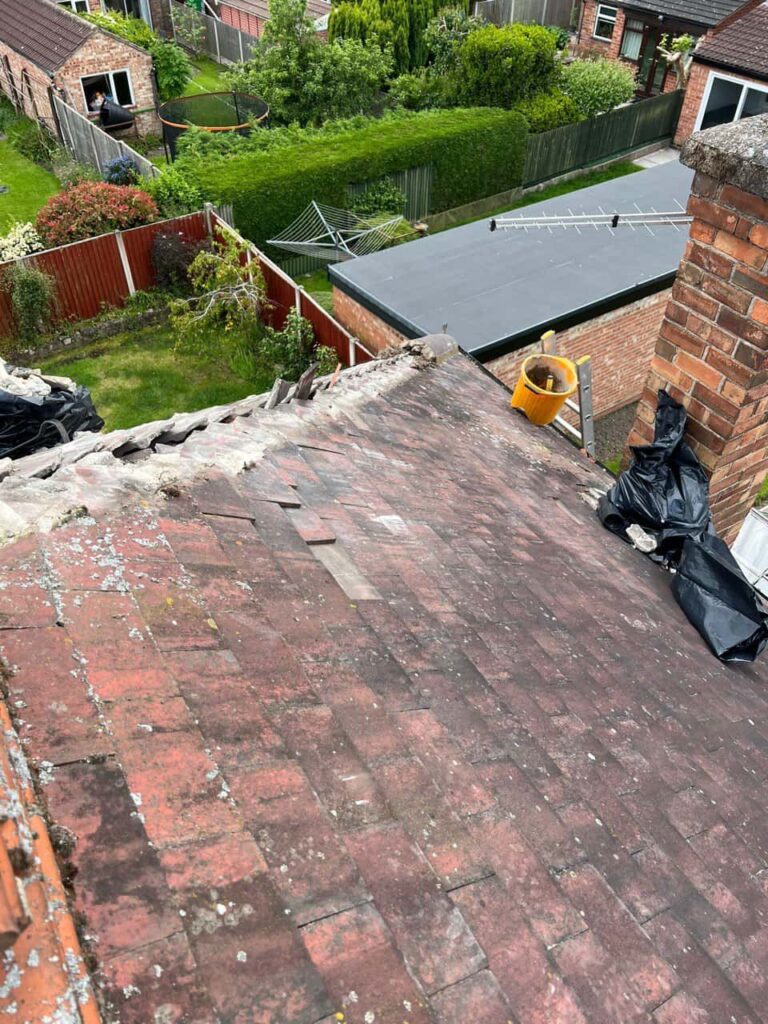
Roof flashing is an essential part of a weatherproof roofing system. It helps prevent water from entering vulnerable areas where the roof meets chimneys, walls, roof windows and other structures. Although flashing is often overlooked during routine property maintenance, damage to these components can lead to leaks, dampness and deterioration if left unresolved.
For homeowners in Clay Cross, Derbyshire, recognising the early signs of roof flashing damage can help protect the property from avoidable water ingress. Understanding what to look for and when to seek professional assistance is an important step towards maintaining a reliable roof.
What Is Roof Flashing and Why Is It Important?
Roof flashing consists of weather-resistant materials, commonly lead or other suitable metals, installed at joints and transitions across the roof. Its purpose is to direct rainwater away from vulnerable points and towards the appropriate drainage areas.
Flashing is commonly found around chimneys, roof valleys, abutments where a roof meets a wall, and roof windows. These areas are particularly susceptible to leaks because water can collect or pass through small gaps if the joints are not properly sealed.
Even when the roof tiles appear to be in good condition, damaged flashing can compromise the roof’s ability to keep water out. Regular inspections and timely repairs help maintain effective protection against the elements.
Common Warning Signs of Roof Flashing Damage
Water Stains on Ceilings and Walls
Brown marks, damp patches or peeling paint near ceilings and chimney breasts can indicate water entering through damaged flashing. Moisture may travel along roof timbers or masonry before becoming visible indoors, so the source of a leak is not always directly above the affected area.
If these signs appear following rainfall, arrange a professional inspection to identify the cause before the damage spreads.
Loose, Lifted or Cracked Flashing
Flashing can become loose or lift away from adjoining surfaces as materials age and weather conditions cause repeated movement. Cracks, splits and gaps can develop around joints, creating openings through which rainwater can penetrate.
From ground level, some defects may be difficult to see clearly. If flashing looks uneven or appears to have separated from a chimney or wall, avoid attempting to inspect it by climbing onto the roof.
Damaged Flashing Around Chimneys
Chimneys are common locations for flashing-related leaks because several surfaces meet in a relatively small area. The flashing must form an effective connection between the chimney masonry and the surrounding roof covering.
Deteriorated mortar, poorly fitted flashing or gaps around the chimney can allow water to enter. Dampness around a chimney breast or in the loft near the chimney may indicate that the area requires closer examination.
Persistent Leaks Despite Other Roof Repairs
If a roof continues to leak after damaged tiles have been replaced, the problem may lie with the flashing or another roof junction. Water can enter through a small opening and travel beneath the roof covering before appearing inside the property.
Repeatedly addressing the visible symptoms without identifying the source can leave the underlying defect unresolved. A thorough roof inspection helps establish whether flashing repairs are required.
What Causes Roof Flashing to Deteriorate?
Roof flashing is exposed to rainfall, wind, temperature changes and general weathering throughout the year. Over time, these conditions can weaken joints, affect fixings and cause materials to move or deteriorate.
Poor installation or unsuitable previous repairs may also leave flashing vulnerable to water penetration. In some cases, movement between adjoining building materials can place additional stress on the joints.
In Clay Cross, Derbyshire, keeping an eye on the condition of roof junctions is a practical way to identify potential problems before they develop into more extensive leaks. However, the precise cause of damage can only be confirmed through an appropriate inspection.
Why Professional Roof Flashing Repairs Matter
Effective flashing repairs require the damaged area to be assessed carefully, including the surrounding roof covering and adjoining surfaces. Simply applying sealant over a visible gap may provide only a temporary improvement if the flashing itself has deteriorated or has become detached.
A professional roofer can identify the source of water ingress, determine whether the flashing can be repaired or needs replacing, and ensure that the repaired junction directs water away from vulnerable areas.
The correct repair method depends on the flashing material, the location of the defect and the condition of the surrounding roof. Proper workmanship is important because poorly executed repairs can leave hidden gaps that allow moisture to return.
Prompt attention can also help limit secondary problems, such as damp insulation, damaged roof timbers, mould growth and deterioration of internal finishes.
How to Reduce the Risk of Flashing Problems
Although flashing cannot be protected entirely from weathering, a few maintenance measures can help identify developing issues early.
- Check ceilings, loft spaces and chimney breasts for unexplained damp patches or water stains.
- Look for visible signs of roof damage from a safe position on the ground.
- Arrange a roof inspection if leaks return after previous repairs.
- Address loose roof components and deteriorating joints promptly rather than waiting for water to enter the property.
- Avoid climbing onto the roof or attempting repairs without the appropriate equipment and experience.
These measures can help homeowners recognise warning signs, but professional assessment remains important when flashing damage is suspected.
Conclusion
Roof flashing plays a vital role in preventing water from entering the vulnerable joints and transitions of a roofing system. Loose materials, cracked joints, damp patches and recurring leaks can all indicate that repairs are needed.
For homeowners in Clay Cross, Derbyshire, addressing flashing problems promptly can help protect the roof structure and reduce the risk of further water damage. Identifying the underlying cause is just as important as repairing the visible defect.
If you have noticed signs of a roof leak or suspect that your flashing has deteriorated, Clay Cross Roofing Repairs can assess the affected area and recommend suitable repairs. Contact us to arrange an inspection and help keep your roof weather-resistant and your home protected.
Call us on: 01246 956 398
Click here to find out more about Clay Cross Roofing Repairs
Click here to complete our contact form and see how we can help with your roofing needs.